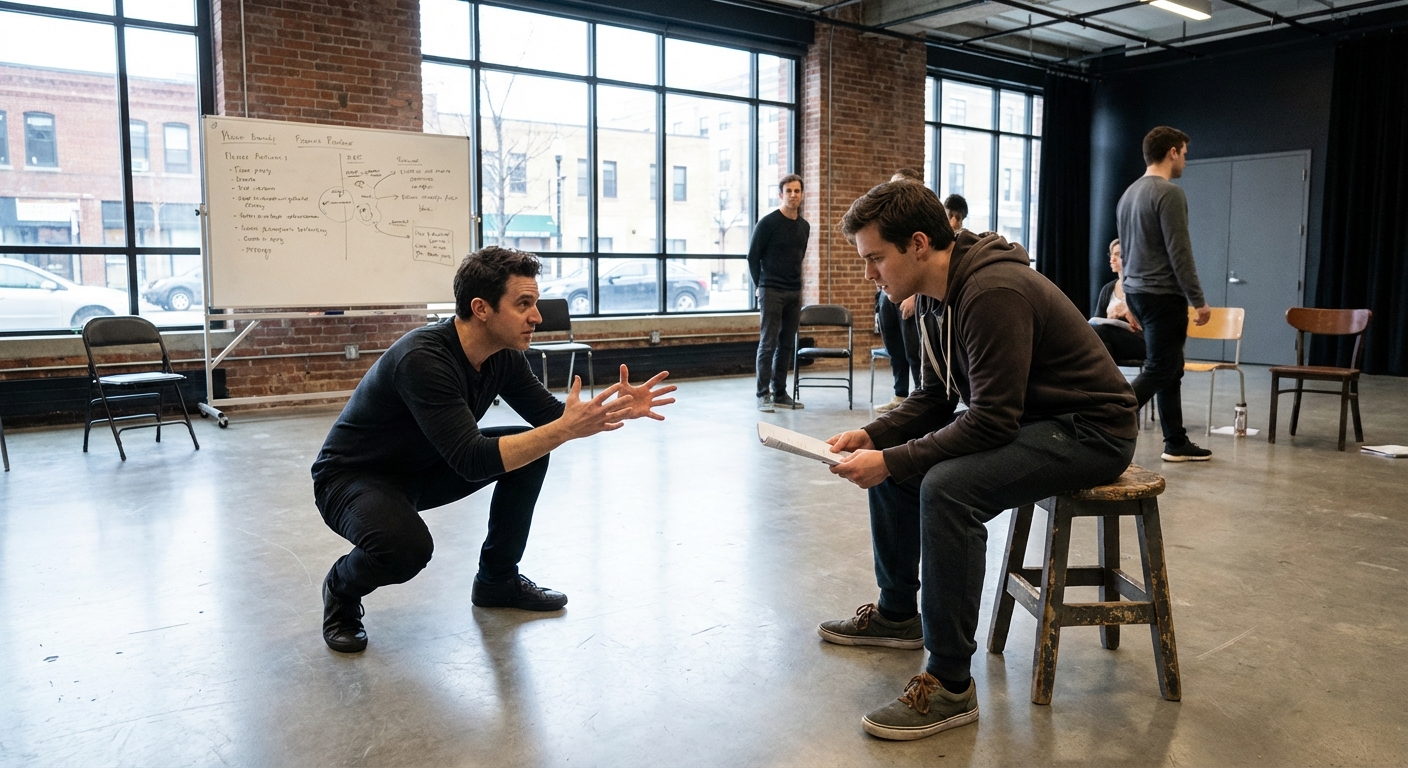
The evolution of acting techniques from Stanislavski to Practical Aesthetics represents a fascinating journey into the art of performance, revealing how professionals continuously reshape their craft in response to the zeitgeist of the times. Konstantin Stanislavski, a name synonymous with realistic acting, ushered in a new era in the early 20th century that emphasized emotional truth and psychological depth. His method focused on the actor’s internal process, urging performers to tap into their personal experiences to vividly portray characters. This revolutionary approach not only reshaped the expectations for stage performance but also laid the groundwork for subsequent generations of actors.
As the theatrical landscape progressed, the desire for new techniques led to the emergence of several acting methods, including the well-renowned Practical Aesthetics. Developed in the 1980s by David Mamet and William H. Macy, this technique was, in part, a reaction to the emotional heavy lifting required by Stanislavski’s method. Instead of delving into the depths of the psyche, Practical Aesthetics encourages actors to focus on “doing” rather than “feeling.” This strategic pivot embraces a more straightforward, action-oriented approach where the actor’s job is to deliver their lines and actions with clarity and precision, centering on what is happening instead of what the character feels.
At the heart of Practical Aesthetics lies the philosophy that clarity and simplicity can lead to profound connections on stage. Actors trained in this method analyze the text and establish their characters not simply from personal emotional memories, but through actions and objectives. In this manner, the actor steps into the shoes of their character by engaging with the script in a way that respects its inherent structure, choosing clear objectives that align with their character’s intentions.
The juxtaposition of these two methods highlights the ongoing conversation in the acting community about authenticity versus realism. Stanislavski champions emotional authenticity as a pathway to truth in performance, urging actors to channel their lived experiences while Practical Aesthetics balances this notion by emphasizing the effectiveness of comprehension—understanding not only the words spoken but the actions taken in the moment.
Interestingly, both approaches demand a high level of preparation and discipline from the actor. Where Stanislavski might lead an actor to explore their inner life through extensive character exploration and emotional research, Practical Aesthetics requires a session of rigorous text analysis and a focus on physical actions that will translate effectively for the audience. Both methodologies emphasize the importance of communication within the ensemble, fostering collaboration among actors. This inherently relates to their shared goal: to create a compelling reality on stage that resonates with audiences.
The legacy of Stanislavski can be felt in many modern applications; his influence is found in the rigorous training programs that shape today’s actors. Institutions teaching the basics of acting, including the foundational techniques of emotional memory and imaginative play, often leverage Stanislavski’s principles to build a comprehensive curriculum. Indeed, many practitioners in the field acknowledge that while Practical Aesthetics provides a practical toolkit for performance, the richness of Stanislavski’s psychological depth offers vital insights that enhance an actor’s potential.
Ultimately, the journey from Stanislavski to Practical Aesthetics is not just about different methodologies; it’s about how actors interpret their roles and the paths they choose in telling stories. As society evolves, so too does the spectrum of techniques available to performers, each offering unique insights into the human experience.
Bridging Techniques: A New Age of Acting
As we continue to explore the myriad acting techniques available, embracing a duality of emotional realism and practical application fosters adaptability in actors. This synthesis not only prepares them for varied roles but enhances their overall understanding and execution of performance. Adopting elements from both Stanislavski and Practical Aesthetics enables actors to develop a versatile toolkit that allows for greater creativity and connection with their audiences.
For aspiring actors, embracing both the poignant lessons of Stanislavski’s method and the pragmatic approach of Practical Aesthetics can lead to a fuller understanding of their craft. A fusion of these methodologies may just be the key to unlocking greater authenticity on stage, proving that there is no one right way to act. Instead, the richness of acting lies in the blend—an intricate dance between emotional truth and meticulous action.
As the theatre evolves, witnessing how techniques continue to intertwine and influence future generations of actors—and how they will reinterpret these foundational teachings—will always be a thrilling part of the narrative. The journey continues, inviting all performers to not only reflect on their method but to innovate and transform it, much like Stanislavski and Mamet once did.