The story of Howard Hughes is one that intertwines ambition, technology, and intrigue, fundamentally altering the landscape of Cold War espionage. Known for his larger-than-life persona and groundbreaking contributions to aviation, Hughes became a pivotal figure in one of the CIA’s most audacious operations. This operation, which aimed to recover Soviet submarines lost in the Pacific, epitomizes the high-stakes drama of Cold War intelligence.
In 1968, two Soviet submarines, K-129 and K-222, sank in the depths of the Pacific Ocean, just a few hundred miles from Hawaii. Their loss presented a unique opportunity for the United States, potentially providing critical insights into Soviet naval technology and capabilities. The CIA, eager to obtain intelligence that could tip the balance in the Cold War, recognized that salvaging these subs could yield invaluable information on Soviet submarine designs and operational strategies.
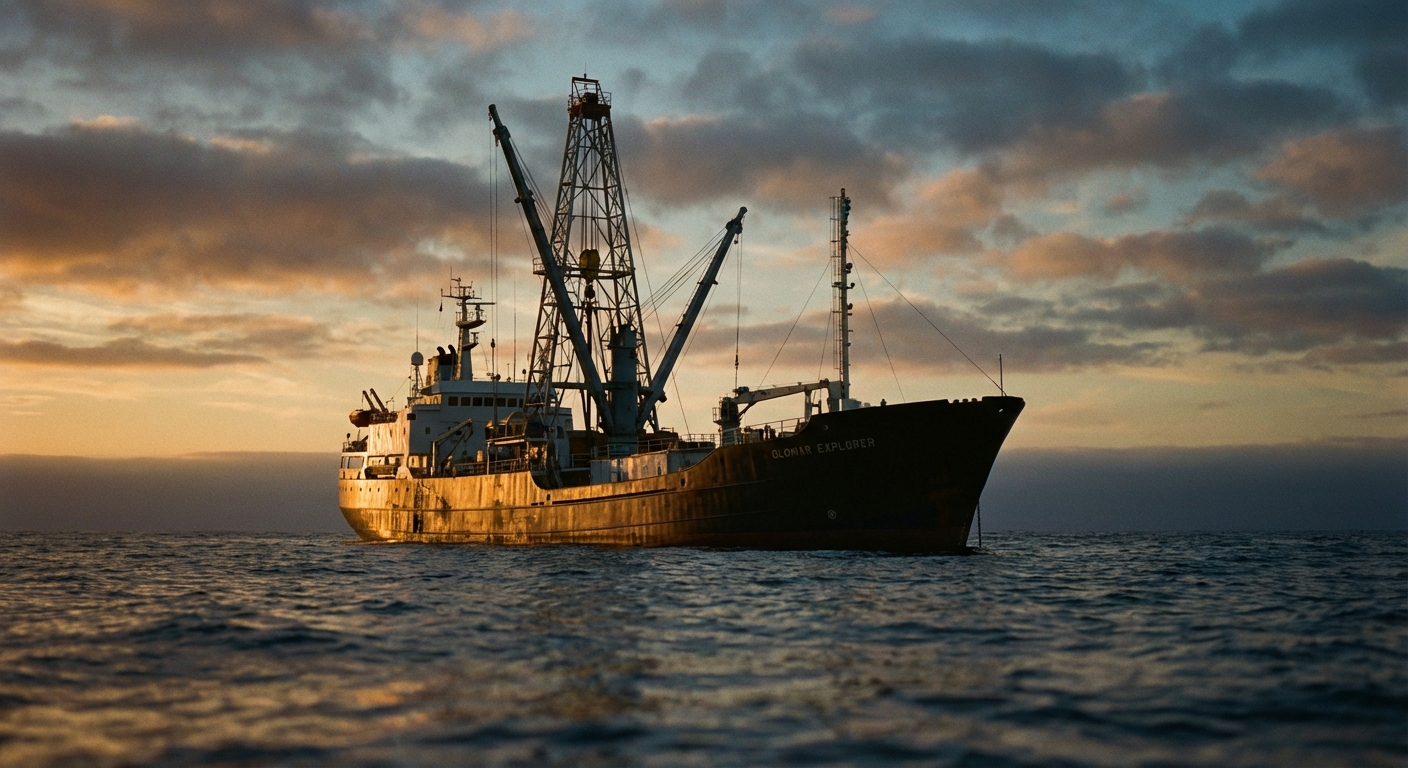
However, retrieving the submarines was fraught with challenges; they lay in icy waters, thousands of feet deep. To execute this monumental task, the CIA enlisted the help of Howard Hughes, who, despite his eccentricities, was recognized for his engineering genius and vast resources. The plan hinged on creating the Hughes Glomar Explorer, a ship disguised as a deep-sea mining vessel but, in fact, specifically designed for this covert operation.
The Genesis of the Hughes Glomar Explorer
The Hughes Glomar Explorer was a marvel of engineering. Spanning 600 feet long and featuring a unique claw design, it was constructed in the early 1970s at the Sun Shipbuilding and Dry Dock Company in Pennsylvania. Officially, it was touted as a ship for mining manganese nodules, an intriguing cover for the depths of its true mission. The American public, and even many within the government, were unaware that this ship was equipped with the technology and capability to reach the wreck site of the K-129.
Over time, elaborate operational measures were taken to protect the mission’s secrecy. The project, known as Operation Jennifer, was reported to involve a collaboration between the CIA and Hughes, with the former funding the ship’s construction to the tune of millions of dollars. As the Glomar Explorer prepared for deployment, the potential stakes escalated. The Soviets had lost a nuclear submarine and were sure to secure the wreck site—the U.S. could not afford to let this espionage opportunity slip away.
A High-Stakes Operation
In June 1974, the Hughes Glomar Explorer set sail, pursuing the elusive K-129. The recovery mission utilized advanced deep-sea technology, culminating in a nerve-wracking operation. The ship reached the designated coordinates and lowered its claw-like apparatus into the abyss. As the claw grasped what they believed to be a significant portion of the submarine, the world held its breath. When the claw surfaced, however, it was a mixed victory; rather than the entire submarine, the crew retrieved a section that included cryptographic equipment, sailor remains, and various Soviet documents.
This partial success raised both excitement and scrutiny. The CIA managed to access invaluable intelligence concerning Soviet submarine designs and communications, but the operation was rife with complications. The very fact of the operation had to be carefully concealed to avoid raising any alarms. The Hughes Glomar Explorer thus became a symbol of the audacity required in Cold War espionage, embodying the ongoing battle for supremacy between the U.S. and Soviet Union.
Aftermath and Impact
As the operation concluded, the revelations about the Glomar Explorer’s mission slowly began to seep into public consciousness. The project was briefly revealed in the 1970s, drawing attention to the lengths the CIA was willing to go to secure national interests. Hughes, ever the enigmatic figure, became intertwined with matters of national security, reflecting how private industry can intertwine with government intelligence efforts.
Ultimately, the Hughes Glomar Explorer operated in obscurity until the Cold War’s end, representing both the ingenuity of American military technology and the moral complexities surrounding espionage. The operation provided critical intelligence, reinforcing U.S. naval capabilities and revealing vulnerabilities in Soviet engineering, thereby shaping submarine warfare strategies for years to come.
Today, the legacy of Howard Hughes and the CIA’s bold operations continues to inspire narratives of innovation intertwined with clandestine activities. As we reflect on these histories, it sheds light on the intricate fabric of espionage that has shaped international relations and military strategies during the tumultuous years of the Cold War.